
search-icon
Triggerfish, Mussels and Coral

Iliana Baums, a marine biologist at Penn State University, explained her research last night after dinner. She’s looking at Porites lobata, a major reef-building coral in the Pacific and Indian Oceans, and its identical-looking relative P. evermanni, and how they fit into the greater reef ecosystems. (These are what’s known as cryptic species, meaning they look the same morphologically but are genetically distinct.) She described the three-way interaction between the Porites corals, the mussels that bore into them, leaving distinctive keyhole-shaped holes, and the triggerfish that bite the coral trying to get at the mussels inside.
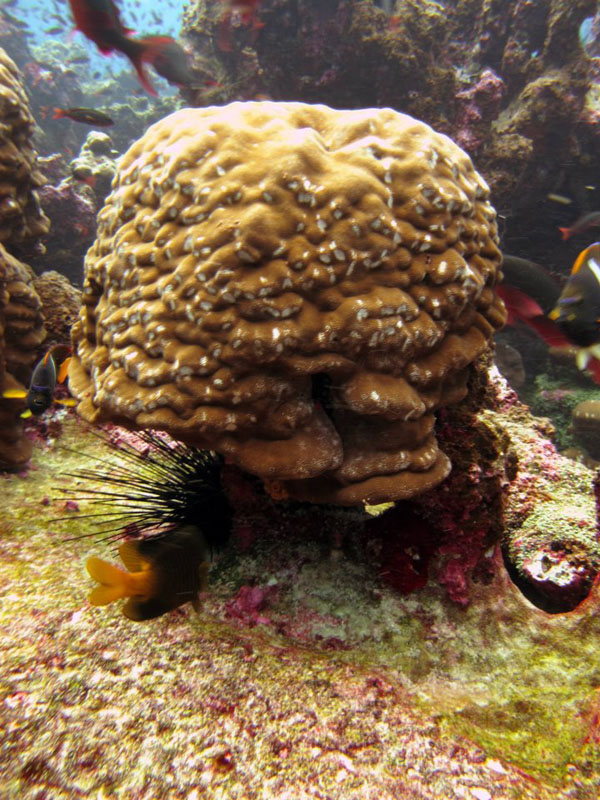
Porites lobata colony

Porites evermanni seems generally hardier; it lives in harsher environments and doesn’t bleach as often as P. lobata. One of the hypotheses Baums is testing on this trip is whether P. evermanni reproduces asexually more frequently than P. lobata because of this interaction. Coral can reproduce either sexually, by releasing sperm and/or eggs into the water, or asexually, which includes new colonies starting from broken pieces. If P. evermanni attracts more mussels, which then attract more triggerfish, the broken pieces of coral the fish bite off (already weakened by the mussels’ drilling) could start new coral colonies more often. If this is true, it’s an example of how cryptic species, even if they look identical, can play a very different role in their ecosystem.
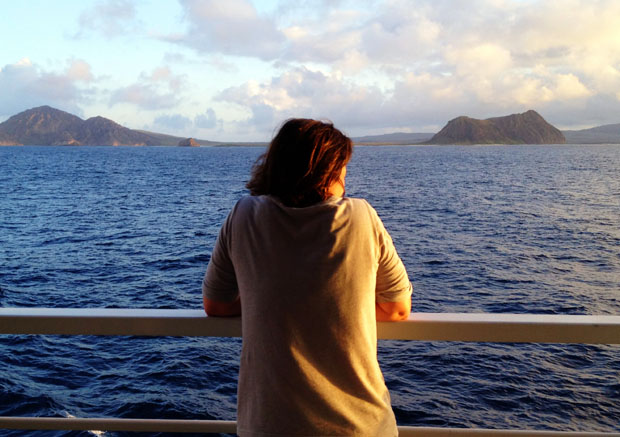
Iliana Burns watches the sun set over Isabela Island
Iliana Baums watches the sun set over Isabela Island

(Photos/Images by: 1 Brian Beck, 2 Julian Smith)

To follow along and see more photos, please visit us on Facebook! You can also follow the expedition on our Global Reef Expedition page, where there is more information about our research and team members.
Related Posts

From Students to Stewards: A Full-Circle Moment for J.A.M.I.N.

There are certain faces you never forget.

Over the years, hundreds of students have stepped into mangrove forests with us through the Jamaica Awareness of Mangroves in Nature (J.A.M.I.N.) program. I may not always remember every name, but I remember the expressions — the hesitation before stepping into thick mud, the laughter when someone loses a shoe, the look of surprise when they catch that unmistakable sulfur smell rising from the mangrove soil…

Read More

World Oceans Day: Protecting the Ecosystems That Protect Us

This World Oceans Day, the global community is being challenged to think differently about the ocean.

The 2026 World Oceans Day theme, “Reimagine: Beyond the World We Know, A New Relationship With Our Ocean,” invites us to recognize that the ocean is not something distant or separate from our lives. It regulates our climate, supports our economies, provides food for billions of people, and sustains the natural systems that make life on Earth possible.

Few places illustrate this connection more clearly than the coastal ecosystems that protect our shores and support marine life. While coral reefs, mangrove forests, and seagrass meadows are often…

Read More
Privacy Overview

This website uses cookies so that we can provide you with the best user experience possible. Cookie information is stored in your browser and performs functions such as recognising you when you return to our website and helping our team to understand which sections of the website you find most interesting and useful.  You can view our complete Privacy Policy here.

Strictly Necessary Cookies

Most of our cookies are used to improve website security and reduce spam. These cookies should be enabled at all times. They also enable us to save your preferences for cookie settings.

3rd Party Cookies

This website uses Google Analytics to collect anonymous information such as the number of visitors to the site, and the most popular pages. Keeping this cookie enabled helps us to improve our website.