search-icon
There and Back Again, a Scientist’s Journey

In 1998, we visited Rangiroa Atoll shortly after sea temperatures rose 6 degrees greater than summer norms and caused massive coral bleaching. Virtually all of the branching coral Pocillopora died and a quarter of the mound-shaped coral, Porites, lost almost all their ‘skin’. Many of these mound-shaped corals were several hundred years old but were reduced to fragments of their former selves in a matter of months. It’s a little like an oak forest being reduced to mere oak saplings.
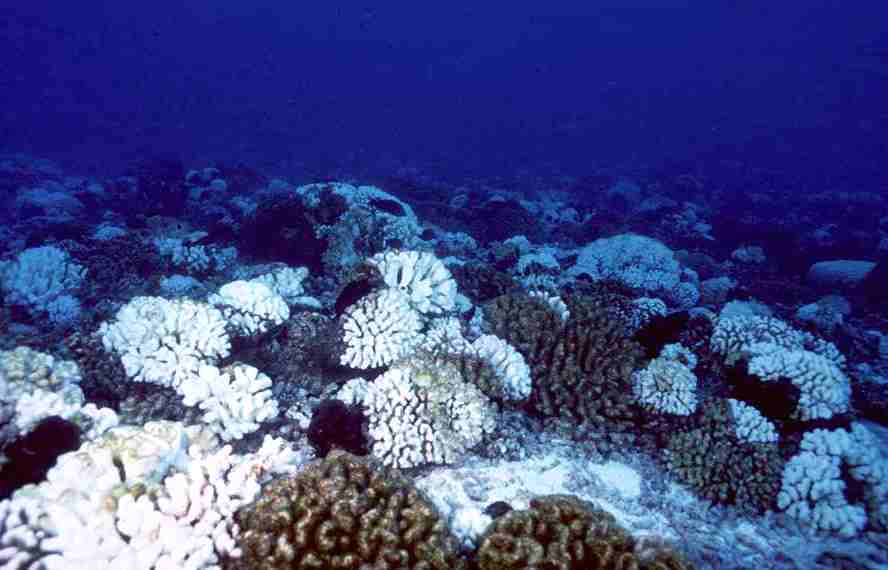
Bleached Pocillopora colonies in 1998
Bleached Pocillopora colonies in Rangiroa in 1998
Dr. Pete Mumby diving by dead Porites colonies
Dr. Peter Mumby diving by dead Porites colonies in 1998

Rangiroa Reef Recovery

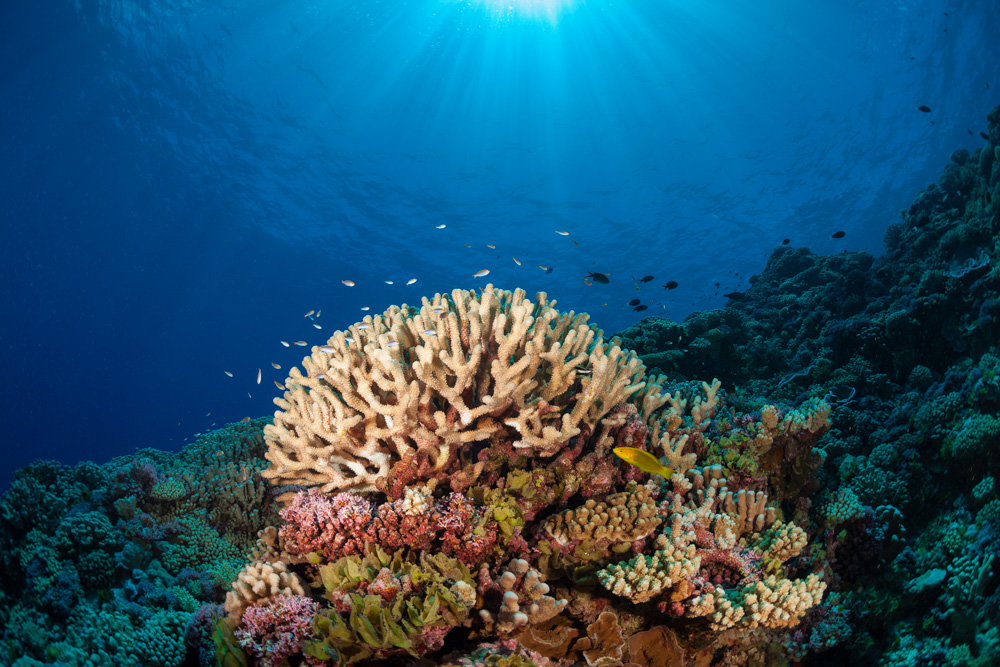
Revisiting these reefs fifteen years later, we found incredible recovery. The branching corals have rebounded in profusion but surprisingly, the Porites have also recovered. This is new to science – we had no idea that these long-lived corals could recover so dramatically. It seems that the little fragments of living coral managed to regrow over the dead skeleton. One way to visualize this is to imagine that you peeled back an orange to leave just a tiny piece of peel. That represents what the coral bleaching did to the coral surface. Now imagine that the remaining fragment of orange peel grew back leaving you with the original orange.
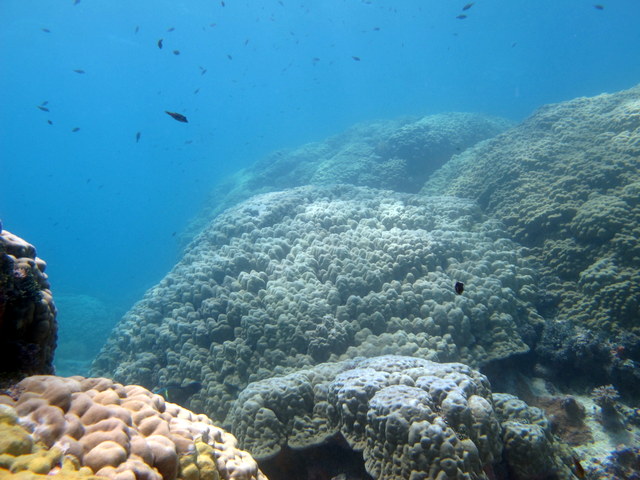
Rangiroa Reef Recovery: Large healthy Porites colonies at Rangiroa atoll. There were the same colonies that had suffered a mortality event in 1998 and are mostly healthy today.


Finding that some corals have great regenerative capability gives us hope that corals are more vigilant towards climate change impacts than we thought.
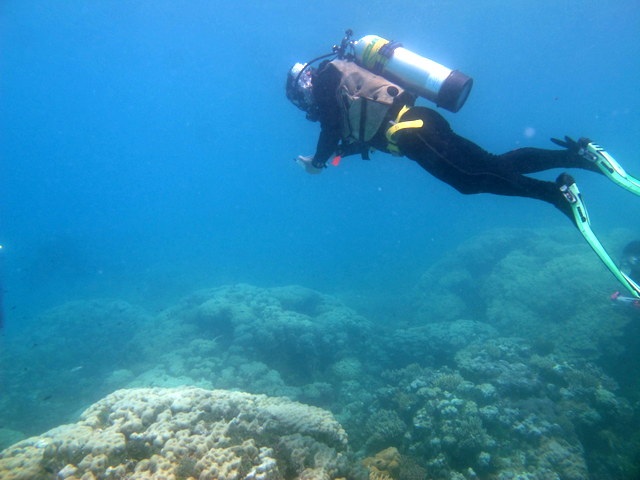
Dr. Pete Mumby observing the same reef on this mission; an incredible story of reef recovery.
Dr. Peter Mumby observing the same reef on this mission.

(Photos by 1 – Prof. Jean Jaubert; 3-4 Brian Beck)

To follow along and see more photos, please visit us on Facebook

Related Posts

From Students to Stewards: A Full-Circle Moment for J.A.M.I.N.

There are certain faces you never forget.

Over the years, hundreds of students have stepped into mangrove forests with us through the Jamaica Awareness of Mangroves in Nature (J.A.M.I.N.) program. I may not always remember every name, but I remember the expressions — the hesitation before stepping into thick mud, the laughter when someone loses a shoe, the look of surprise when they catch that unmistakable sulfur smell rising from the mangrove soil…

Read More

World Oceans Day: Protecting the Ecosystems That Protect Us

This World Oceans Day, the global community is being challenged to think differently about the ocean.

The 2026 World Oceans Day theme, “Reimagine: Beyond the World We Know, A New Relationship With Our Ocean,” invites us to recognize that the ocean is not something distant or separate from our lives. It regulates our climate, supports our economies, provides food for billions of people, and sustains the natural systems that make life on Earth possible.

Few places illustrate this connection more clearly than the coastal ecosystems that protect our shores and support marine life. While coral reefs, mangrove forests, and seagrass meadows are often…

Read More
Privacy Overview

This website uses cookies so that we can provide you with the best user experience possible. Cookie information is stored in your browser and performs functions such as recognising you when you return to our website and helping our team to understand which sections of the website you find most interesting and useful.  You can view our complete Privacy Policy here.

Strictly Necessary Cookies

Most of our cookies are used to improve website security and reduce spam. These cookies should be enabled at all times. They also enable us to save your preferences for cookie settings.

3rd Party Cookies

This website uses Google Analytics to collect anonymous information such as the number of visitors to the site, and the most popular pages. Keeping this cookie enabled helps us to improve our website.