
June 7, 2012
The story of how these not-incredibly-attractive islands in the middle of the Pacific became world famous starts on December 27, 1831, when the H.M.S. Beagle sailed from Plymouth, England on a five-year round-the-world voyage. On board was an unpaid naturalist named Charles Darwin, age 22.
The Beagle followed the coastline of South America and reached the Galapagos in September 1835. Darwin spent 19 days ashore on the islands of San Cristóbal, Floreana, Santiago, and Isabela, collecting samples, observing animals and taking notes. What he discovered provided crucial clues to what some have called “the single best idea anyone has ever had.”
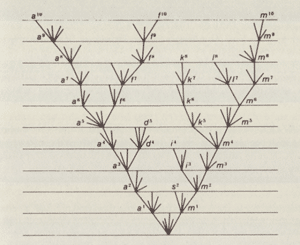
Darwin had left England a firm believer in the Biblical story of creation, but already he had seen things that challenged the idea: dinosaur bones in Argentina, fossilized seashells high in the Andes. In the Galapagos, he pondered tortoise shells and finch beaks that were similar, but noticeably different from island to island. Could these somehow have come from a single common ancestor, molded by their different environments?

