Posts Tagged ‘coral bleaching’

Lessons from the Reef: Did You Know?

Friday, March 1st, 2013

March 1, 2013

By Eddie Gonzalez

It’s been two weeks since the Gambier portion of the Global Reef Expedition to French Polynesia ended. In less than two weeks, our science team will be heading back to French Polynesia to conduct research in Rangiroa. In the meantime, everyone is busy preparing travel itineraries, ensuring all supplies have been restocked, and confirming final research sites for the next voyage.

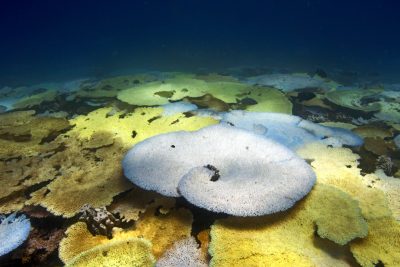
Coral as far as you can see.

Coral as far as you can see.


The time between missions is also spent looking at data, photos, and video collected so far. This short video (about 4.5 minute) was filmed during the Gambier mission as part of the Living Oceans Foundation CREW (Coral Reef Educator on the Water) program. It features Megan Berkle, a high school teacher from Los Angeles, CA, who joined the mission to help us expand our educational efforts. We hope you enjoy it and pass it on to your friends, family, and colleagues.

YouTube: Lessons from the Reef–Did You Know?

Megan says, "See you on the reef."

Megan says, “See you on the reef.”

(Photo credit: 1 and 2 by Eddie Gonzalez)

Living in Harmony, but Stress Can Kill

Wednesday, October 3rd, 2012

October 2, 2012

Written by Joao Monteiro

Coral reefs are often called the rainforests of the seas. Teeming with life, reefs harbor a broad range of organisms that rely on a complex network of ecological interactions and symbiosis (close and often long-term interaction between two or more different biological species).

The diversity and complexity of coral reefs starts at the microscopic level. Within the coral tissue, symbiotic algae (dinoflagellates), commonly called zooxanthellae (their scientific name is Symbiodinium), are crucial to the coral hosts. Like leaves from a tree, these microscopic algae harvest light and produce energy in the form of carbon rich compounds.

A cross section of a coral polyp showing the zooxanthellae within the tissue. The coral was preserved and processed for viewing under a microscope. The tissue has been stained with a purple dye.

A cross section of a coral polyp showing the zooxanthellae within the tissue. The coral was preserved and processed for viewing under a microscope. The tissue has been stained with a purple dye.

Read the rest of Living in Harmony, but Stress Can Kill »

An Interview with Peter Glynn

Monday, June 18th, 2012

June 16, 2012

Peter Glynn, Professor of Marine Biology and Fisheries at the University of Miami, was one of the first scientists to study the coral reefs of the Galapagos. He’s the head of the U. Miami team on board the Golden Shadow, which includes four of his former students: Iliana Baums, Derek Manzello, Tyler Smith and Joshua Feingold.

Peter Glynn (L) and Bernhard Riegl at Concha y Perla lagoon

Peter Glynn (L) and Bernhard Riegl at Concha y Perla lagoon

How did you first get involved in studying the coral reefs in the Galapagos?

In 1974, Jerry Wellington was here with the Peace Corps surveying marine habitats for the Galapagos National Park. I was staff scientist at the Smithsonian Tropical Research Institute in Panama. When I got wind he was finding coral reefs, I hooked up with him and in 1975 we put together an expedition to survey all the coral reef habitats.

Read the rest of An Interview with Peter Glynn »

Virtual Connections

Thursday, March 29th, 2012

March 29, 2012

Throughout this week, students from two high schools—Gig Harbor High School in Gig Harbor, Washington and Corona del Sol High School in Tempe, Arizona—have been virtually following the Global Reef Expedition to learn more about the work of the Living Oceans Foundation. Recruited through the Coral Reef Educator on the Water (CREW) Program, the schools represent entirely different environments from that of Navassa. They recently had an opportunity to submit questions to Navassa Mission researchers.

Our usual morning greeting.

Our usual morning greeting.

Read the rest of Virtual Connections »

Hogsty’s New Reef Recruits

Friday, August 12th, 2011

August 11, 2011

In 1997-1998, the marine equivalent of a massive and destructive forest fire overwhelmed numerous coral reefs around the world.  Caribbean coral biologists still speak of the bleaching event of 1998 in reverential tones.  A powerful El Niño season was a factor in generating extreme tropical sea surface temperatures.  As a consequence, over-stressed corals everywhere released their symbiotic algae known as zooxanthellae [zoh-zan-thel-ee].  This phenomenon is known as coral bleaching.

Millions of microscopic zooxanthellae play a critical role in a coral colony’s ability to both metabolize, and process waste.  The tiny algae also give corals their color.  When zooxanthellae are released into the water column, the remaining coral head appears as white as its underlying calcium carbonate skeleton.   A coral colony can survive for a limited time without zooxanthellae, as long as environmental conditions return to normal.  Slowly, new zooxanthellae will reappear in the coral tissues, and the corals, although susceptible to disease and algal overgrowth, having a fighting chance of recovery.  However, in 1998, conditions did not level out and an estimated 16% of the world’s corals died (Wilkinson 2000).  In some regions, the rate of mortality was probably much higher, and the relatively shallow western Caribbean  and Bahamas were likely hit especially hard.


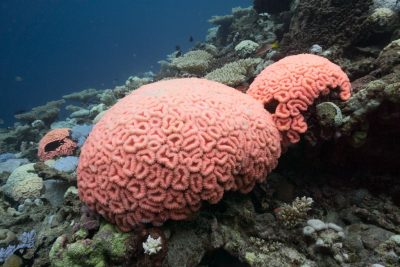
A bleached brain coral becoming overgrown with algae.  Photo: NOAA

A bleached brain coral becoming overgrown with algae. Photo: NOAA


To understand our initial observations taken at eight study sites on Hogsty Reef, thirteen years after the 1998 massive bleaching event, let’s return now to the forest fire analogy.  Imagine large, healthy coral heads on a reef as the old growth trees of a forest.  When a raging fire burns through a forest, it destroys almost all of the young seedlings and saplings, leaving behind only a few of the strongest old-growth trees.  However, any remaining live trees are weakened and damaged by the fire and are susceptible to diseases and parasites.  The surviving trees are also responsible for reseeding the forest with the next generation of seedlings.


Read the rest of Hogsty’s New Reef Recruits »

Understanding Reef Resilience

Wednesday, June 8th, 2011
June 6, 2011

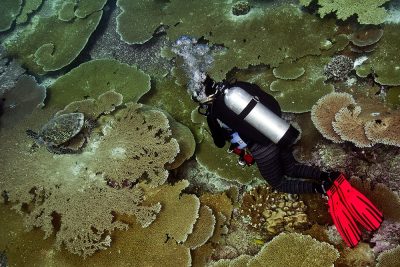
Afternoon Dive

A major component of our work during the Global Reef Expedition focuses on understanding factors and processes that enhance the resilience of coral reefs.  We evaluate a number of ecological, physical and chemical parameters at each reef we visit, which allows us to compare and rank reefs within a single location and across large spatial scales to come up with a coral reef health index.  We combine data on coral population structure, recruitment, health and disease, algal community assemblages, degree of herbivory, fish community structure and biomass, and other parameters we collect during our rapid assessments to determine how resilient a reef is.  We will then develop recommendations on actions that can be taken to either protect that resilience or enhance it in stressed locations.  

This approach is being taken by other researchers as well, but the parameters that are measured vary and the strategy to compare the resilience of reefs also varies.  What is your baseline for a healthy or resilient reef?  Is the best location in a particular country or region the highest ranked site and all others are ranked against this standard?  Is a reef that is considered in near-pristine state (which is difficult to find nowadays) the standard and all others are compared against this standard?  Is a reef that has changed significantly due to a widespread decline of one of the most important reef building corals (star corals), from which recovery to their former glory would require 100s of years (like many Caribbean reefs) still considered resilient if much of the structure is still present, assemblages of other species are intact, and there are high levels of recruitment, herbivory and other processes we consider essential for a properly functioning reef?  What is the reef resilient to? 

Most resilience assessments today are targeting one parameter in particular: coral reef bleaching.  Reef-building corals and other organisms have symbiotic relationships with single-celled photosynthetic algae (dinoflagellates), known as zooxanthellae (other similar symbionts occur in sponges and other organisms).  These organisms are vital to the health and proper functioning of a coral, providing food, removing metabolic waste products, aiding in calcification and a host of other functions. Bleaching is a phenomenon where the coral animal (polyp) becomes stressed and the zooxanthellae are expelled, or the zooxanthellae lose their photosynthetic pigments, and the coral becomes pale, or in extreme cases stark white, as if someone poured chlorine bleach on the coral. 

Various stages of bleaching in a mountainous star coral (Montastraea faveolata)

Various stages of bleaching in a mountainous star coral (Montastraea faveolata)

Read the rest of Understanding Reef Resilience »

GRE Website YouTUBE Channel Follow on Facebook Follow on Twitter RSS Feed Updates LOF Website

Search

Calendar

May 2013
M T W T F S S
« Apr    
 12345
6789101112
13141516171819
20212223242526
2728293031  

Archives