search-icon
Sea Cucumber Craze – Part 1

They have cylindrical bodies, leathery skin, and generally are peculiar looking creatures. You may or may not have noticed these slow moving animals on the bottom of the sea floor. They are sea cucumbers, and they are considered a delicacy in most Asian countries. They are used fresh or dried in many culinary dishes.
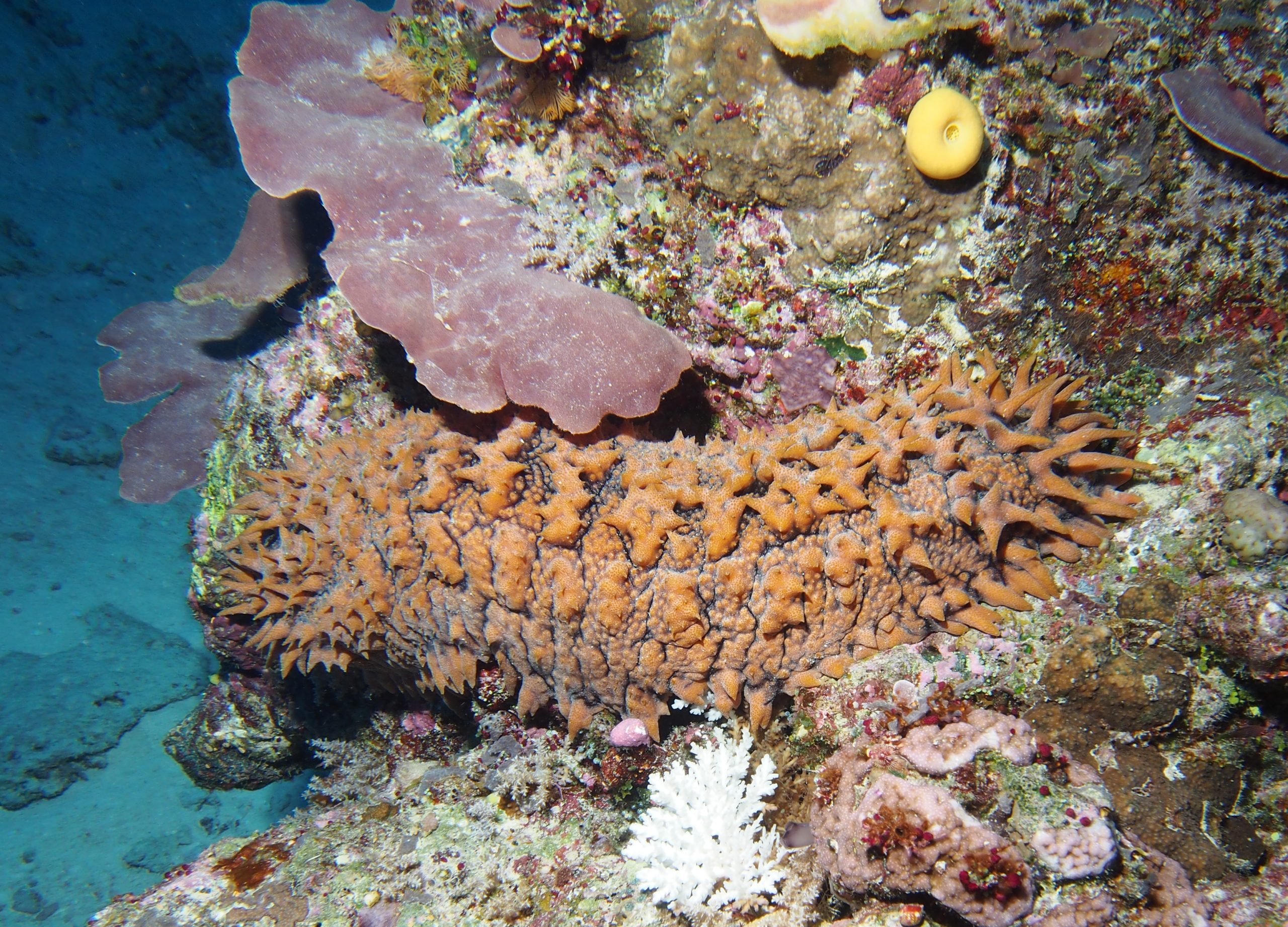
Pineapple sea cucumber, Thelenota ananas.
Pineapple sea cucumber, Thelenota ananas

In Fiji, sea cucumbers or sasalu are harvested and sold to Asian countries. With a market value upwards of $50 (US) each, they are highly prized for anyone who can find them.  However, herein lies the problem. With such high incentives, Fijians are now overharvesting these vulnerable, slow-moving sea cucumbers (about 10 feet an hour) that don’t stand a chance against speedy free divers.

Sea cucumbers are sometimes called the “earthworms of the sea,” as they cultivate the seafloor in much the same manner as earthworms cultivate the soil. Tube feet around the mouth are covered with a sticky mucus that traps detritus (decaying matter) from the seafloor’s sediment. In areas where overfishing has reduced the population of sea cucumbers, the seafloor hardens and bacteria accumulates which has harmful effects on the adjacent coral reef.
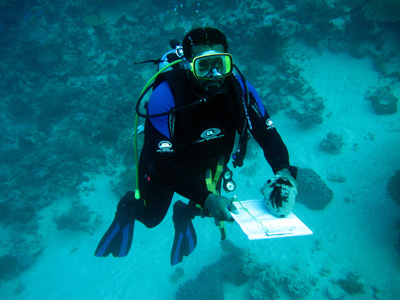
Fijian Fisheries Officer, William Saladrua, conducting sea cucumber surveys.

Sea Cucumber Surveys Aim to Provide Information to Local Communities

This is where the Fiji Department of Fisheries, University of South Pacific and Wildlife Conservation Society come in. For several years these entities have been conducting sea cucumber surveys throughout Fijian waters. Now, representatives from each organization have joined the Global Reef Expedition to conduct sea cucumber surveys of the remote islands we are visiting and communicate with the local villages in the Lau Province.
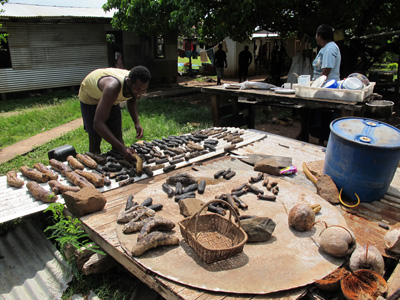
In Fiji, sea cucumbers are dried before sold.

Ron Vave, Senior Scientific Officer at the University of the South Pacific explains, “We are really excited to be able to conduct sea cucumber surveys in these remote areas and gather more information. In turn, we will be able to communicate the current status of local species, and provide recommendations for management to the local communities. They will then have the most up to date information so they can make informed decisions that benefit their communities now and into the future.”

Stay tuned for more information on sea cucumber surveys and overfishing.

(Photos/Images by: 1 Andrew Bruckner; 2,3 Stacy Jupiter)

To follow along and see more photos, please visit us on Facebook!
Related Posts

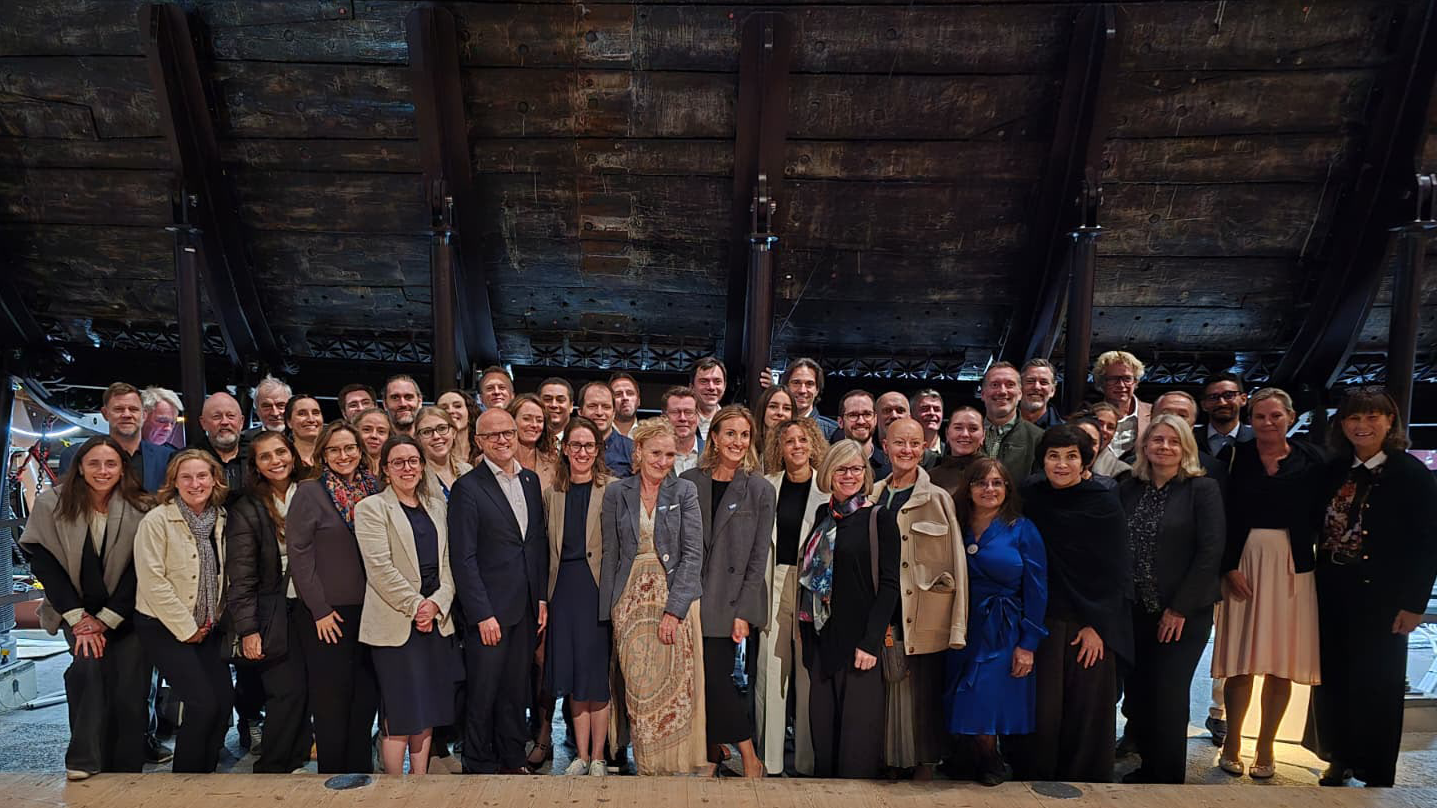
From Dialogue to Action: Ocean Foundations Gather in Stockholm

What can philanthropy accomplish when foundations working across ocean science, conservation, and sustainable development come together around a shared purpose?

That question was at the heart of the 6th UN Ocean Decade Foundations Dialogue, held September 7–9 in Stockholm, Sweden. The Khaled bin Sultan Living Oceans Foundation joined philanthropic organizations from around the world for three days of discussion, collaboration, and planning focused on accelerating progress during the second half of the UN Decade of Ocean Science for Sustainable Development.

Facilitated by UNESCO’s Intergovernmental Oceanographic Commission (IOC), the UN Ocean Decade Foundations Dialogue is a growing network of more than 30 philanthropic organizations committed to advancing ocean science, collaboration, and action. Since its creation within the framework of the Ocean Decade, the Dialogue has provided foundations with a space to exchange ideas, develop partnerships, and explore how philanthropy can help advance a healthy and resilient ocean.

Hosted by the Voice of the Ocean Foundation (VOTO), this year’s gathering began with From Depth to Action, an Opening Forum that brought nearly 100 leaders from the Swedish and international ocean community together at…

Read More

Meet IFAN: Helping Bring Navigate with Care to the Next Generation

If you’ve ever seen a lighthouse flashing from the shore or a brightly colored buoy bobbing in the water, you’ve seen Aids to Navigation at work.

Aids to Navigation, often called AtoNs, help mariners navigate safely. They can mark channels, warn of hazards, help vessels determine their position, and provide other information people need to make safe decisions on the water. Around the world, these systems help guide everything from small recreational boats to large commercial or container ships. 

But safe navigation isn’t only about protecting vessels and the people aboard them. The choices mariners make can also affect the animals and ecosystems beneath and around them.

That connection between maritime safety and ocean conservation is at the heart of this year’s Science Without Borders® Challenge—and of our partnership with this year’s theme sponsor, the International Foundation for Aids to Navigation (IFAN).

Read More
Privacy Overview

This website uses cookies so that we can provide you with the best user experience possible. Cookie information is stored in your browser and performs functions such as recognising you when you return to our website and helping our team to understand which sections of the website you find most interesting and useful.  You can view our complete Privacy Policy here.

Strictly Necessary Cookies

Most of our cookies are used to improve website security and reduce spam. These cookies should be enabled at all times. They also enable us to save your preferences for cookie settings.

3rd Party Cookies

This website uses Google Analytics to collect anonymous information such as the number of visitors to the site, and the most popular pages. Keeping this cookie enabled helps us to improve our website.