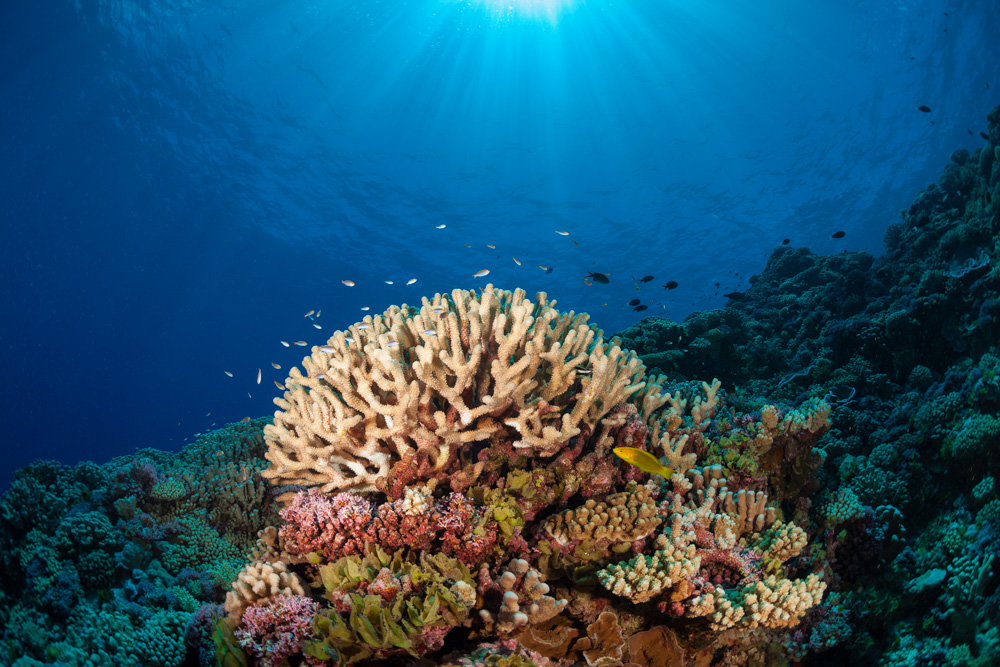
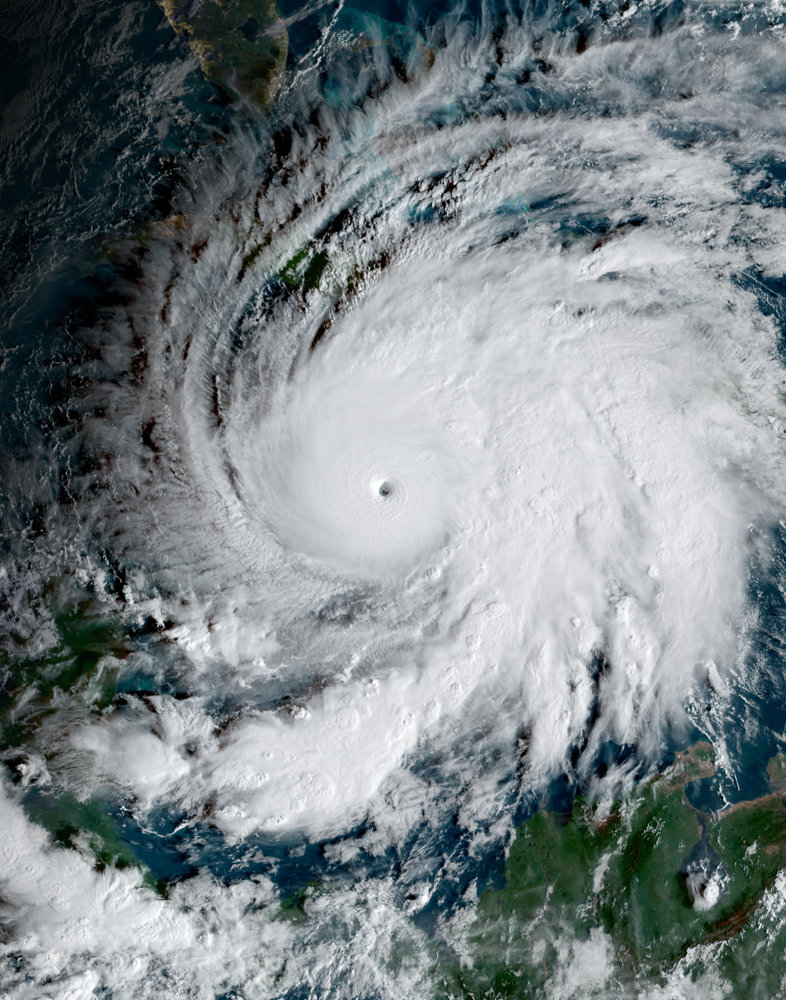
Today was a busy day: three dives and – finally – calm enough seas to launch the Twin V with Steve Schill’s sidescan sonar. The original plan was to do one dive, then stop by Middle Cay and ask the local fishermen for their thoughts on where to find good, protected patches of coral. But the visit was postponed after a fishing boat swung by the Calcutta as we were loading supplies and suggested a few locations on the spot. The crew of the Golden Shadow was happy to fill up their water container. Since the islands have no water sources besides rainfall, fresh water becomes currency out here, like a real-life version of the movie Waterworld.
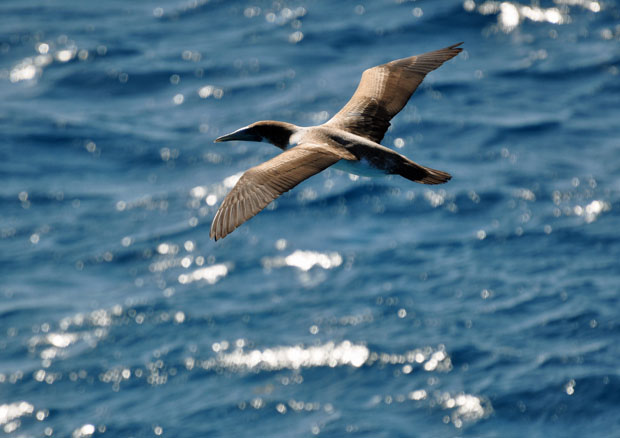
The first dive took us to ridges of staghorn coral interspersed with deep sand pockets. A small nurse shark was resting under a low branch of coral. Toward the end of the dive, someone spotted a gaudy fish with red and black stripes and spots covering its body and long, wavy fins. Almost everyone in range had the same thought: who has the fish spear?
It sounds strange to hear of scientists and marine conservationists thinking about killing a fish, but not when you’re in the Caribbean and you’re talking about a red lionfish (Pterois volitans). These colorful fish have long, venomous dorsal spines ready to deliver an injection of ciguatoxin, which can cause pain, fever and vomiting in people. But the real reason researchers hate the lionfish is that it’s one of the most menacing invasive species to hit Western Atlantic and Caribbean reefs in recent memory.
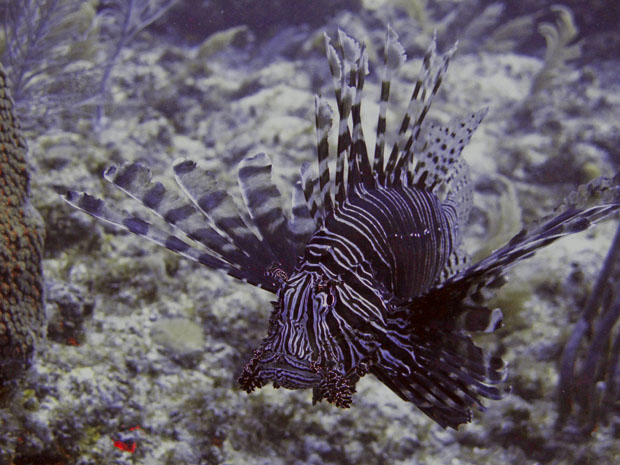
No one knows exactly how the first lionfish arrived—they’re native to the Indo-West Pacific Ocean—but they were first reported off Florida in the mid-1980s. Since then they’ve spread from North Carolina to Central America with astonishing speed. Now they’re the second most abundant fish species from the Outer Banks to the Bahamas, and their range is still expanding. The USGS says it’s the first time a non-native marine fish has ever been able to survive and reproduce successfully in this area.
Even worse, lionfish have no natural predators and eat anything they can get into their mouths. (Oh, and they have been found in waters as cold as 56F, off southern Long Island, so temperature is not stopping them!) They have spread so fast it’s not clear what ecological effect they’re having on reefs yet, but it’s almost certainly not good. One study in 2007 found that after five weeks, a small patch reef with a resident lionfish had 79% fewer new juvenile fishes than one without. Scientists fear that the lionfish, with its booming numbers and aggressive tendencies, will lower reef diversity by pushing native species into worse habitats.
What can we do? It’s probably too late to completely eradicate lionfish in the Caribbean. Conscientious divemasters spear them at every opportunity, and conservation groups are organizing “lionfish derbies” to catch as many as possible. Divers in Honduras are even trying to teach sharks to eat them by handing out fresh nibbles.
And there actually is one good thing about lionfish: it’s tasty. Once you cut the venomous spines off, it’s safe to eat. So, groups like the REEF Environmental Education Foundation and The Nature Conservancy have encouraged divers and fishermen to catch as many lionfish as possible – sometimes in competitive derbies – and serve them up fried, grilled, or jerked. Even better, this leaves overfished populations of other fish species in the water.
And what about the lionfish we saw? Llewellyn Meggs expertly speared it and left it for the nurse shark.
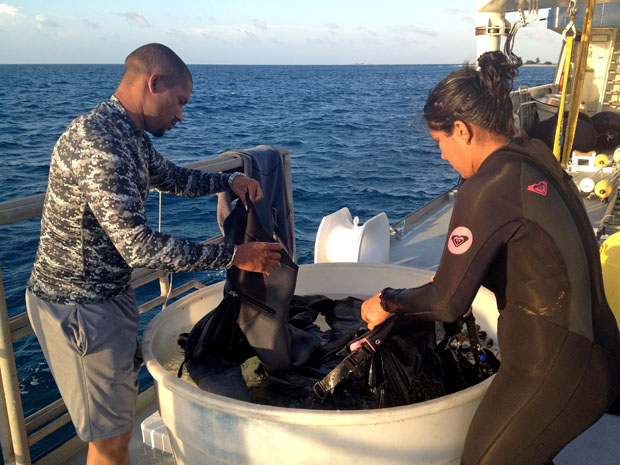
(Photos/Images by: 1 Steve Schill, 2 Brian Beck, 3 Julian Smith)
To follow along and see more photos, please visit us on Facebook! You can also follow the expedition on our Global Reef Expedition page, where there is more information about our research and team members.