
search-icon
Exploring Andros and Abaco By Air

In preparation for the next leg of the Global Reef Expedition, Dr. Sam Purkis, Jeremy Kerr, Captain Steve Breen and Dr. Andy Bruckner  flew over Andros and Abaco Islands, Bahamas  on the Golden Eye seaplane. Their goal was to identify specific research sites and to find anchorages for the Golden Shadow; what they saw was two islands with stark differences.
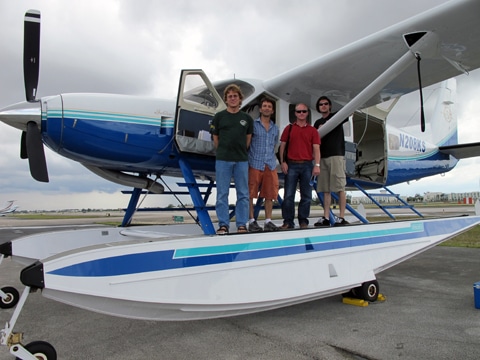
 

Left to right: Dr. Andy Bruckner, Dr. Sam Purkis, CAPT Steve Breen, and Jeremy Kerr

The flight took them from the western (leeward) end of Andros to the southern tip, crossing over sand flats and seagrass beds, many of which were circular and contained a central halo much like that seen in Cay Sal Bank.
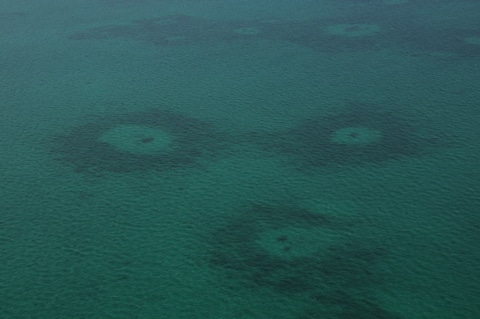
Seagrass halos off Andros Island


Extensive shallow estuarine lakes were carved into the low-lying karst topography on the western Andros Island, the largest island in the Bahamian archipelago.  There were also many deep blue-colored, round sinkholes and in-filled depressions with dense vegetation.
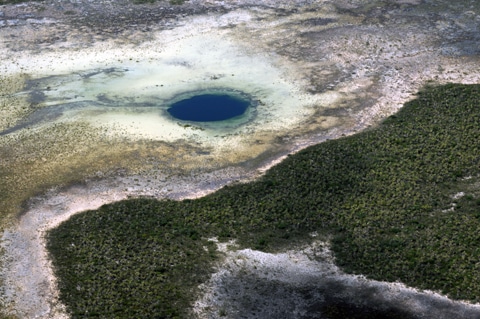
Blue hole on Andros Island


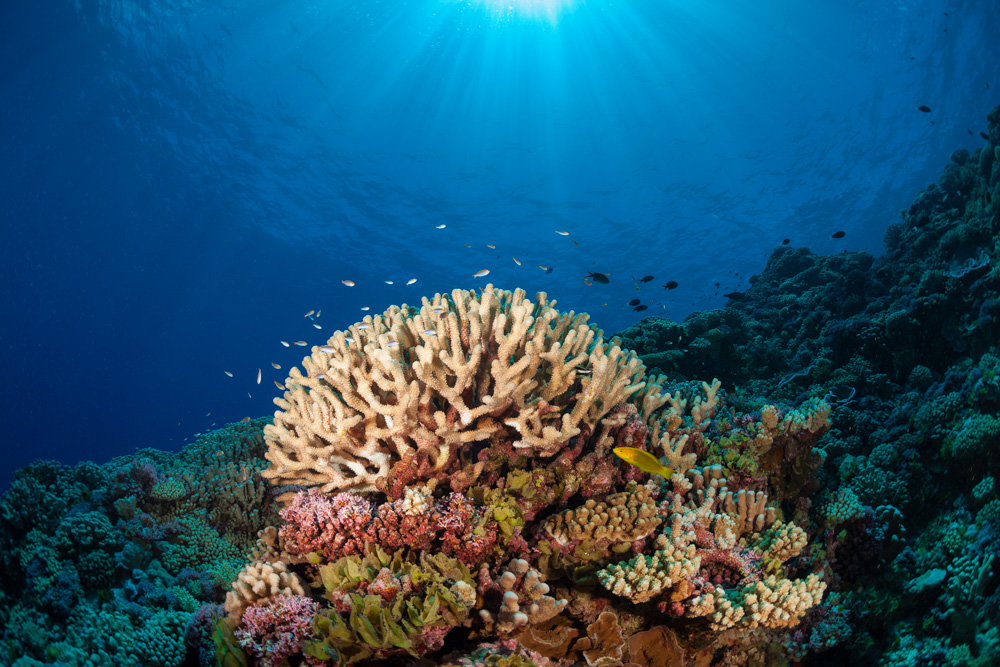
The reef formed a narrow fringe dropping quickly into the Tongue of the Ocean, which reaches depths of 6000 feet or more.  A dense elkhorn coral framework with occasional live corals was visible close to the reef crest. Immediately seaward of this, reef habitats were packed full of small pillar-like star coral bommies.  Moving sand waves and stabilized underwater dunes covered an extensive area at the northern end of Andros on the landward side of the reef.
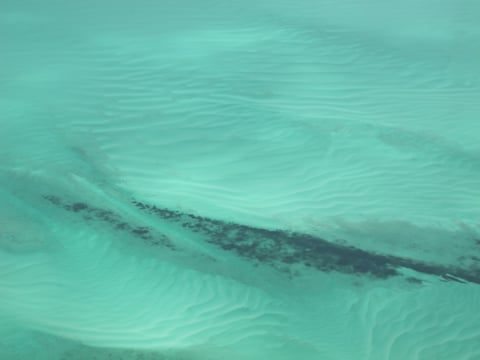
Underwater ooid sand dunes
Underwater sand dunes


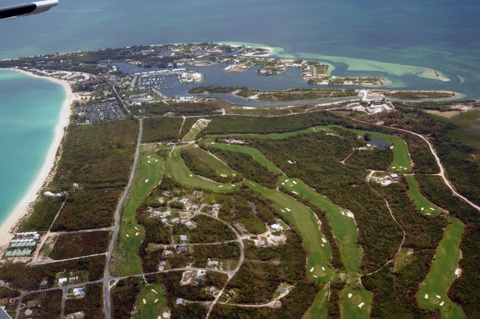
Abaco, the second largest island in the Bahamas was stark contrast to Andros, with a higher density of buildings, golf courses, and other signs of human development.
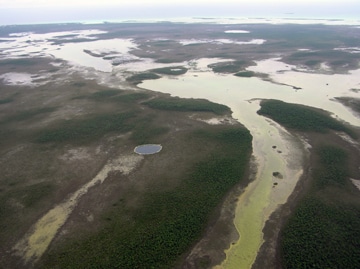
Low development on Andros Island
Developments on Abaco Island


A well-developed barrier reef fringes the eastern end of Abaco island. It is separated from Abaco by a narrow waterway and lies seaward of a line of small islands.
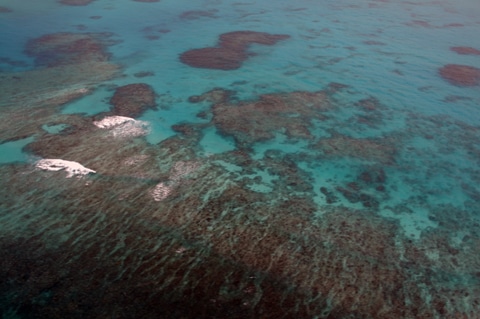
Abaco barrier reef
Abaco barrier reef


The team took extensive aerial photographs and are now ready for the next leg of the Global Reef Expedition.

(Photo/Images by: 1, 4 Dr. Sam Purkis, 2, 3, 6-7 Dr. Andy Bruckner, 5 Jeremy Kerr)

To follow along and see more photos, please visit us on Facebook! You can also follow the expedition on our Global Reef Expedition page, where there is more information about our research and our team members.
Related Posts

From Students to Stewards: A Full-Circle Moment for J.A.M.I.N.

There are certain faces you never forget.

Over the years, hundreds of students have stepped into mangrove forests with us through the Jamaica Awareness of Mangroves in Nature (J.A.M.I.N.) program. I may not always remember every name, but I remember the expressions — the hesitation before stepping into thick mud, the laughter when someone loses a shoe, the look of surprise when they catch that unmistakable sulfur smell rising from the mangrove soil…

Read More

World Oceans Day: Protecting the Ecosystems That Protect Us

This World Oceans Day, the global community is being challenged to think differently about the ocean.

The 2026 World Oceans Day theme, “Reimagine: Beyond the World We Know, A New Relationship With Our Ocean,” invites us to recognize that the ocean is not something distant or separate from our lives. It regulates our climate, supports our economies, provides food for billions of people, and sustains the natural systems that make life on Earth possible.

Few places illustrate this connection more clearly than the coastal ecosystems that protect our shores and support marine life. While coral reefs, mangrove forests, and seagrass meadows are often…

Read More
Privacy Overview

This website uses cookies so that we can provide you with the best user experience possible. Cookie information is stored in your browser and performs functions such as recognising you when you return to our website and helping our team to understand which sections of the website you find most interesting and useful.  You can view our complete Privacy Policy here.

Strictly Necessary Cookies

Most of our cookies are used to improve website security and reduce spam. These cookies should be enabled at all times. They also enable us to save your preferences for cookie settings.

3rd Party Cookies

This website uses Google Analytics to collect anonymous information such as the number of visitors to the site, and the most popular pages. Keeping this cookie enabled helps us to improve our website.