
search-icon
Dance of the Clownfish

Clownfishes and anemonefishes are among the most iconic creatures residing in coral reefs. In Scilly and Bellinghausen, the science team sighted several colorful orange-finned anemonefishes (Amphirion chrysopterus) residing in anemones scattered throughout the shallows of the reef sites.
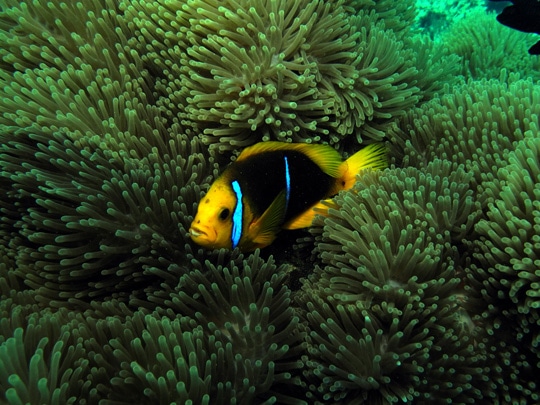
Orange-finned anemonefishes (Amphirion chrysopterus) sitting in an anemone
Orange-finned anemonefish (Amphirion chrysopterus) sitting in an anemone

Clownfishes belong to larger group of fishes generally known as anemonefishes, due to their symbiotic relationship with these cnidarians. In nature, these fishes are never found without an anemone, they have an obligate association with their host. Within the tentacles of the anemones, they find protection from predators. The anemone’s tentacles have specialized stinging cells (cnidoblasts) that deliver a toxin that most fishes rather avoid.
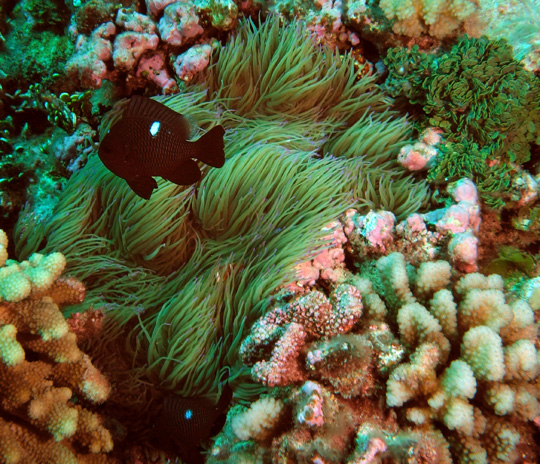
Three-spot damselfish (Dascyluss trimaculatus) are one of the few fishes that can live among an anemone's stinging tentacles.
Three-spot damselfish (Dascyluss trimaculatus) are one of the few fishes that can live among an anemone’s stinging tentacles.


Even though anemonefishes appear to swim “unpunished” around their hosts’ tentacles, they are actually stung by the anemone. In fact, they undergo an acclimation process that allows them to withstand the stinging tentacles of the anemone. This process resembles an elaborate swimming dance in which the fish starts by gingerly touching the tentacles with its ventral fins only, progressing to their belly and then the remaining body, until it is finally able to dive right in. Click here to watch a short video of anemonefishes interacting with their host anemones.

Besides offering protection from predators, the host is also crucial for anemonefishes’ reproduction, as they lay their eggs beneath the oral disc overhang of the anemone. After hatching and going through the larval stages, young fishes settle to the sea bottom and begin their search for a suitable host anemone.
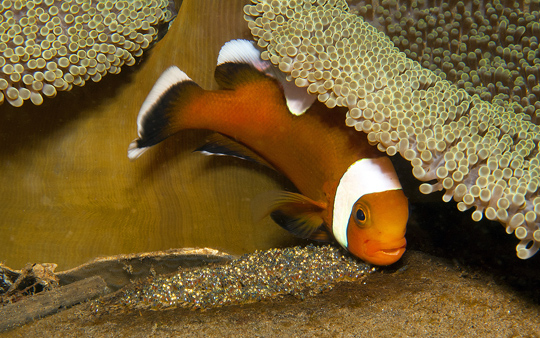
Anemonefish eggs laid beneath the anemone's oral disc overhang and being guarded by a male anemonefish, Papua New Guinea
Anemonefish eggs laid beneath the anemone’s oral disc overhang and being guarded by a male anemonefish, Papua New Guinea


Like many other fish species, anemonefishes go through a sex change. Unlike most fishes, they display a male to female sex reversal. There is usually a dominant large female and one or more males in each anemone, or cluster of anemones. When this female dies, the ovaries of one of the males become active and he replaces the dominant female, while one of the non-breeding individuals becomes the functioning male.

Females lay between 100 and 1,000 eggs in their nests, which are then fertilized and attended by the male. The males guard and care for the eggs throughout the whole incubation period, aggressively chasing away other fishes, frequently fanning the eggs and removing debris and dead eggs with their mouth.
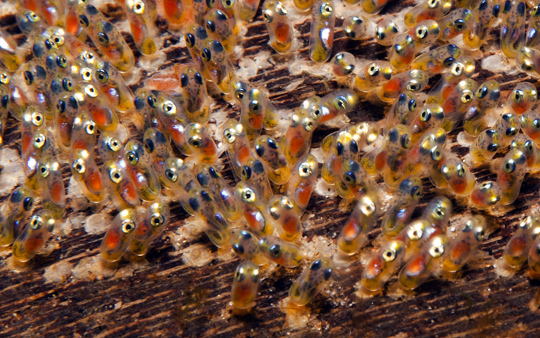
Anemonefish eggs laid within an anemone, Papua New Guinea


There are 28 species of anemonefishes that can associate with one or more of 10 anemone species. Some fish species associate with a single anemone species, while others can associate with a number of different species. True anemonefishes belong to two genus: Amphiprion and Premnas. Identification of these fishes in the wild can be tricky, as color patterns are highly variable. So far we’ve only seen a few species of clown fishes.  As the Society Islands research expedition continues, the science team hopes to encounter more of these iconic fishes.

(Photos by: 1-2 Dr. Andy Bruckner, 3-4 Ken Marks)

To follow along and see more photos, please visit us on Facebook! You can also follow the expedition on our Global Reef Expedition page, where there is more information about our research and team members.
Related Posts

World Oceans Day: Protecting the Ecosystems That Protect Us

This World Oceans Day, the global community is being challenged to think differently about the ocean.

The 2026 World Oceans Day theme, “Reimagine: Beyond the World We Know, A New Relationship With Our Ocean,” invites us to recognize that the ocean is not something distant or separate from our lives. It regulates our climate, supports our economies, provides food for billions of people, and sustains the natural systems that make life on Earth possible.

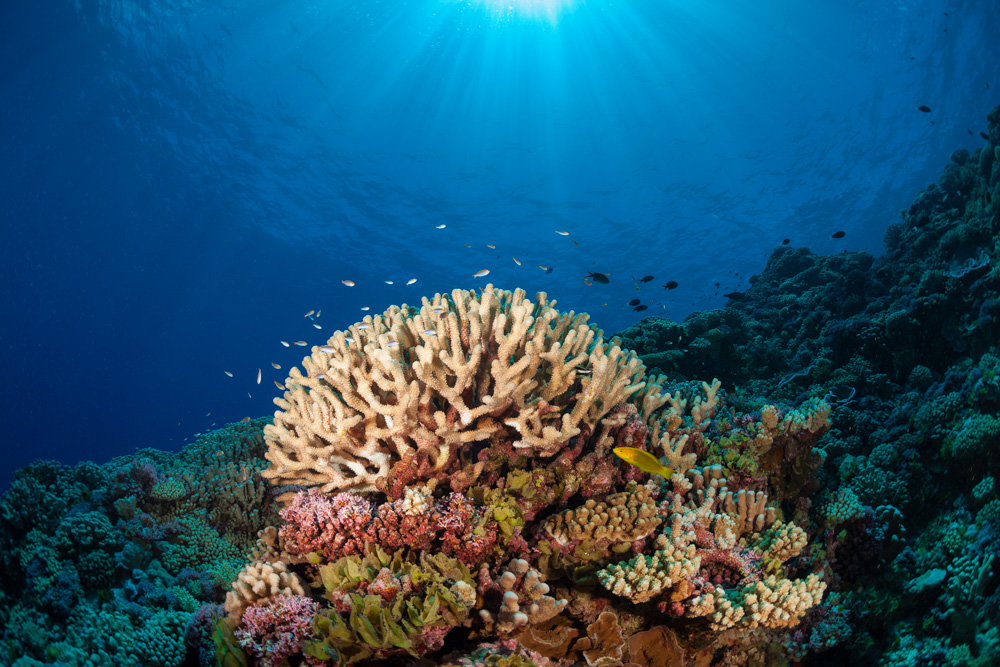
Few places illustrate this connection more clearly than the coastal ecosystems that protect our shores and support marine life. While coral reefs, mangrove forests, and seagrass meadows are often…

Read More

After the Storm: Standing with Our J.A.M.I.N. Family in Jamaica

There are moments in this work that feel heartbreakingly familiar.

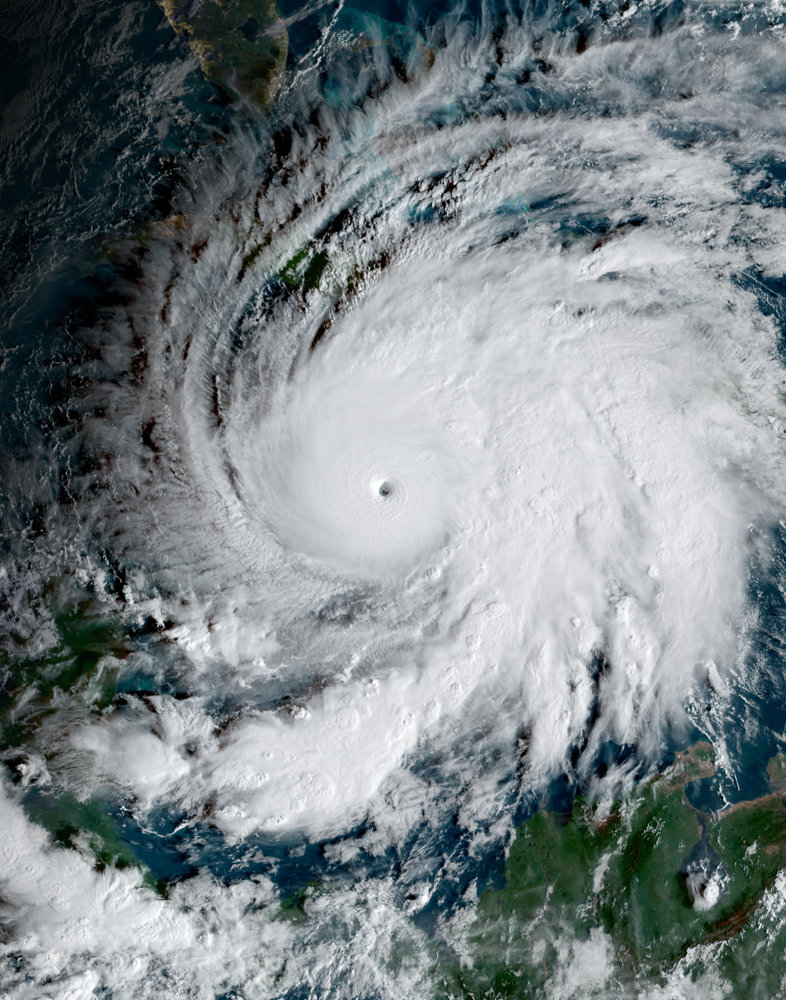
Two weeks after we completed our Jamaica Awareness of Mangroves in Nature (J.A.M.I.N.) programming, Hurricane Melissa made landfall. A powerful Category 5 hurricane, Melissa is now tied with Hurricane Allen in 1980 for the strongest winds ever recorded in an Atlantic storm. Like Hurricane Dorian, which devastated The Bahamas in 2019, Melissa will be remembered as one of the strongest hurricanes on record in the region.

For 11 years, the University of the West Indies Discovery Bay Marine Laboratory and William Knibb Memorial High School have been more than program partners. They have welcomed us into their classrooms and labs, shared meals and laughter, and committed themselves to educating their students about mangroves and coastal resilience. These colleagues and students are not distant collaborators. They are family.

And they were hit hard…

Read More
Privacy Overview

This website uses cookies so that we can provide you with the best user experience possible. Cookie information is stored in your browser and performs functions such as recognising you when you return to our website and helping our team to understand which sections of the website you find most interesting and useful.  You can view our complete Privacy Policy here.

Strictly Necessary Cookies

Most of our cookies are used to improve website security and reduce spam. These cookies should be enabled at all times. They also enable us to save your preferences for cookie settings.

3rd Party Cookies

This website uses Google Analytics to collect anonymous information such as the number of visitors to the site, and the most popular pages. Keeping this cookie enabled helps us to improve our website.