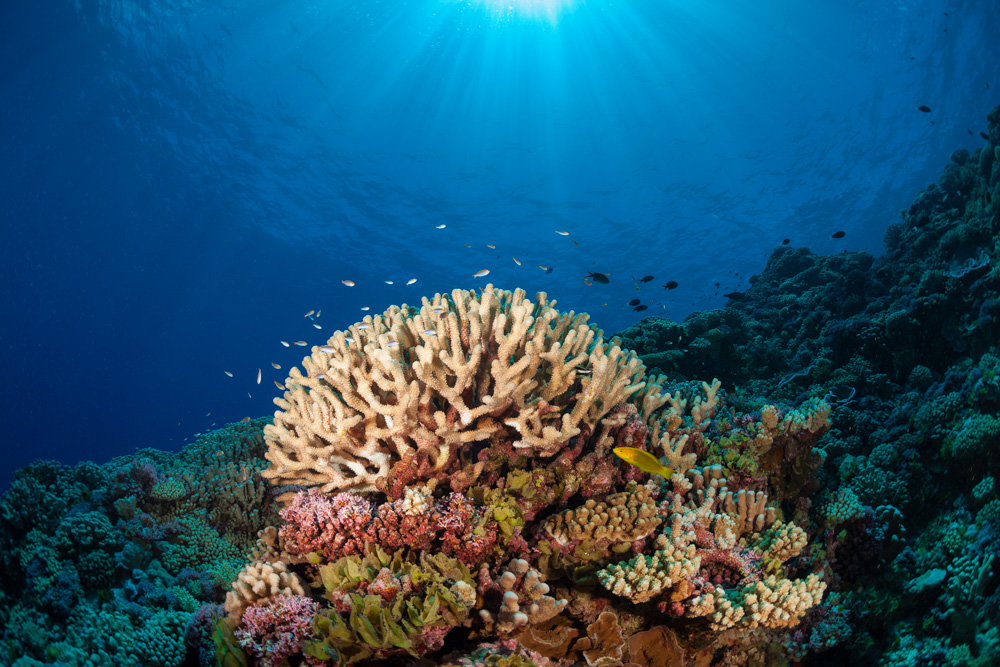
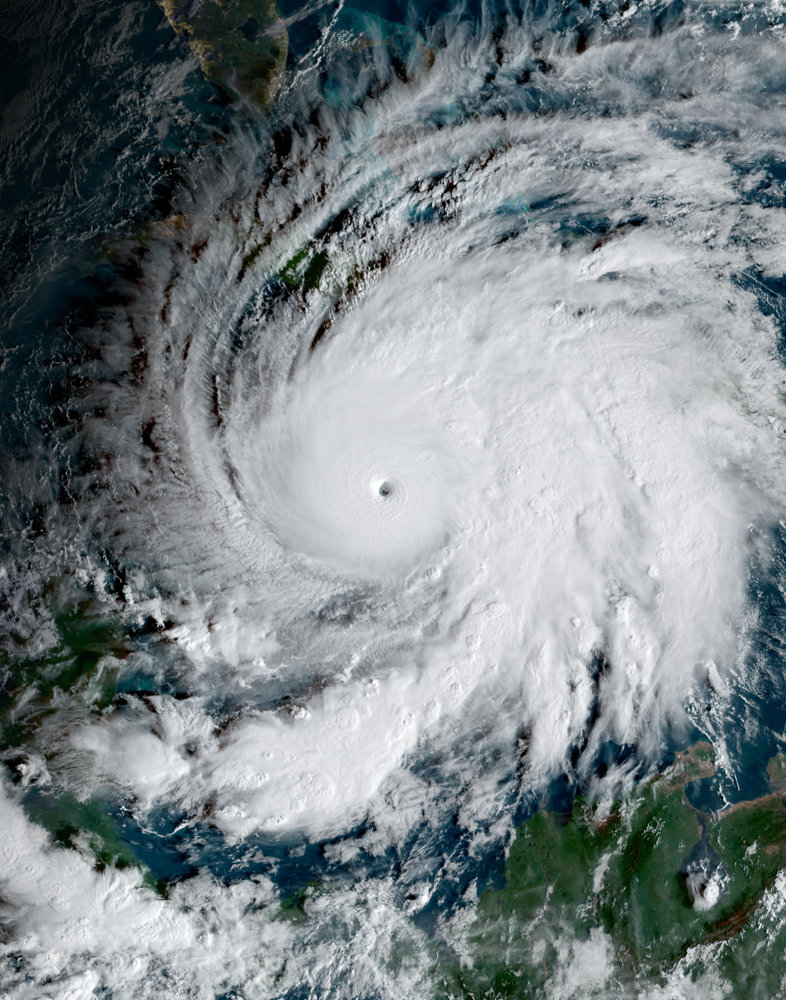
If you took a quick look on Google Earth at the northern San Andres Archipelago, specifically at the three banks the team visited on this latest mission, you’d think they looked pretty similar. But we found instead that each has its own unique, and important character.
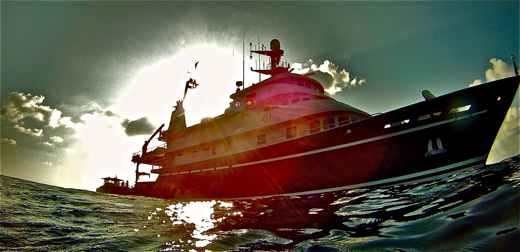
Alice Shoal, our first stop in San Andres Archipelago and the only bank with no land above water, had loads of algae and only sparse corals. But the coral there was almost all healthy. At Serranillo, to the west, we found lots of hard ground with limited coral growth except for some small patch reefs we discovered in the center of the bank. Here again there was relatively little disease.
At Bajo Nuevo, our farthest point east, we found lots of classic reef structure and, overall, the most spectacular dives of the entire mission. However, while Bajo had more corals than you find nowadays at the average Caribbean reef, there was also much more diseased coral than we were expecting.
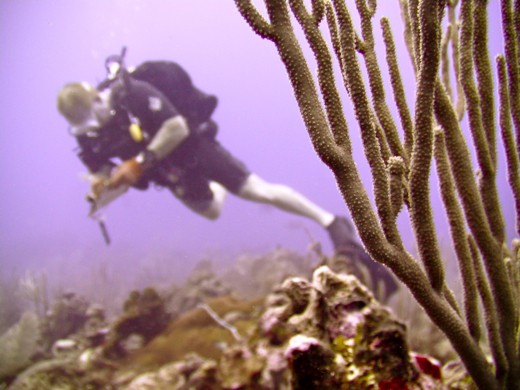
These reefs we explored in the San Andres Archipelago are some of the most remote—if not the most remote—reefs in the entire Caribbean. They are all hundreds of kilometers from civilization. In fact, we were almost certainly the first people to dive on some of these reefs.
Such isolation can be a good thing for reefs in many ways. It means much less pollution and overfishing, for instance. But reefs everywhere must deal with the effects of a warming ocean and more frequent bleaching events that can kill or weaken corals. We saw far more examples than we would have liked of coral colonies that appeared to be succumbing to disease following a recent bout with bleaching.
And despite that isolation, we also saw that the reefs of the San Andres Archipelago are the target of multiple forms of illegal fishing. We crossed paths with a handful of fishing boats and saw signs of their work, like piles of cleaned conchs.

But there was good news as well. There are some who talk of the demise of Caribbean reefs as a process that’s almost complete, and one that can’t be slowed or reversed. We found ample evidence that such a view is too pessimistic.
We learned the San Andres Archipelago is still a refuge for huge stands of healthy corals, often much larger than you could find almost anywhere else in the Caribbean. And we found numerous healthy fish populations. All told, divers spotted some 161 fish species.
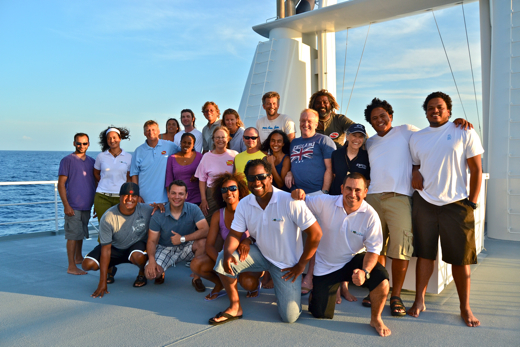
Collectively, what we found in the San Andres Archipelago tells us there are reefs in this region that are in need of further protection, and also quite worthy of protection. We’re encouraged to know that Colombia, in conjunction with other countries such as Jamaica, is working to expand efforts to protect the region’s substantial reef resources. That’s not an easy prospect in a place that is so remote and difficult to patrol, but clearly such efforts will not be wasted. And we’re happy our Colombian team members and their colleagues will be using data gathered on this mission to advance such conservation work.
(Photos: Mark Schrope)
To follow along and see more photos, please visit us on Facebook! You can also follow the expedition on our Global Reef Expedition page, where there is more information about our research and team members.